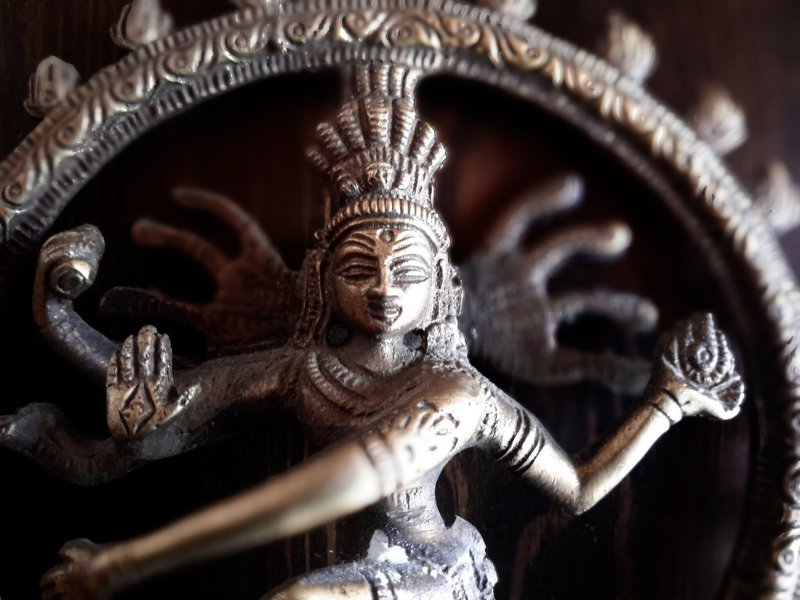
Like a leaf in the wind, moved by an invisible force, barely feeling your body and flying away in total bliss – that is Nataraja – a dance that creates a state of meditation through movement.
Interesting facts about NATARAJA
Nataraja is one of the most famous and symbolically rich representations of the Hindu god Shiva. The name literally means ‘king of dance’ (Nata = dance, Raja = king).
Representation and symbolism: Nataraja is depicted as Shiva dancing, usually in a circle of fire (Prabhamandala). The figure typically has four arms: one hand holds a small drum (damaru), another shows the abhaya mudra (gesture of protection), a third hand carries fire, and the fourth points to the raised foot. With his other foot, he steps on the demon Apasmara, who symbolises ignorance.
Cosmic significance: Nataraja’s dance represents the eternal cycle of creation, preservation and destruction of the universe. The drum symbolises the primordial sound of creation, while the fire represents the destruction that enables transformation. The dance itself embodies the dynamic energy of the cosmos.
Cultural significance: Nataraja is particularly revered in South India and is considered the patron deity of the arts, especially dance. The famous temple of Chidambaram in Tamil Nadu is dedicated to Nataraja. The representation is also an important motif in Indian art and sculpture, with particularly impressive bronze statues from the Chola period (9th-13th century).
This iconography combines spiritual philosophy with artistic beauty, making Nataraja one of the most profound symbols of Hinduism.